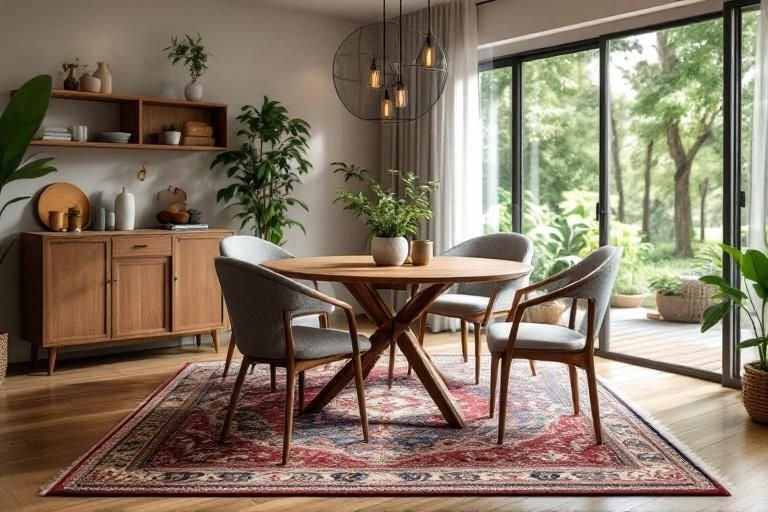
Are you struggling to find the right rug size for your dining room? Choosing the perfect dining room rug size can dramatically enhance your space’s aesthetics and functionality. A well-sized rug not only anchors your dining area but also adds warmth and style. With over 15 years of experience in home decor and design, I understand the nuances involved in selecting the ideal rug dimensions. In this article, you’ll discover essential tips and guidelines for measuring your space accurately, understanding common sizing mistakes, and maximizing the visual appeal of your dining area. Dive in to learn how to choose the perfect dining room rug size that complements your style and enhances your home’s ambiance.
Understanding Dining Room Rug Sizes
Choosing the right rug size for your dining room is essential for creating a harmonious space. The size influences the visual balance, comfort, and functionality of the room. A rug that is too small can make the dining area feel disjointed, while a rug that is too large may overwhelm the space. It’s important to consider the dimensions of both your table and the room itself when selecting a rug. Generally, the rug should extend beyond the edges of the dining table and chairs to accommodate movement and seating.
Measuring Your Dining Table
To determine the ideal rug size, start by measuring your dining table. Length and width are crucial, as a rug should ideally extend at least 24 inches beyond the table edges. This allows enough space for chairs to be pulled out without catching on the rug’s edge, enhancing comfort and usability.
Room Dimensions and Layout
Consider the overall dimensions of your dining room. A larger room can accommodate a bigger rug, while a smaller space might require a more compact option. Additionally, the layout of the room—such as doorways and furniture placement—should influence your choice, ensuring that the rug complements the flow of the space.
Key Points:
- Rug size affects visual balance and comfort
- Rug should extend 24 inches beyond table edges
Rug Shape and Style Considerations
The shape of your rug plays a significant role in the overall aesthetic of your dining room. Common rug shapes include rectangular, round, and square. Each shape can create a different ambiance and can either complement or contrast with your dining table. A rectangular rug often pairs well with rectangular tables, while round rugs can soften the look, especially in smaller or more casual settings. Additionally, the style of the rug should align with your overall decor theme, whether it’s modern, traditional, or eclectic.
Choosing Rug Shape
Select a rug shape that corresponds with your dining table’s shape. Rectangular rugs are ideal for rectangular tables, while round rugs work best with round tables. This alignment enhances the visual flow and maintains a cohesive design. For unique spaces, consider a square rug for a square table.
Matching Style and Decor
The rug’s style should harmonize with the dining room’s decor. If your room features traditional furnishings, a classic patterned rug might be suitable. Conversely, a contemporary dining area may benefit from a minimalist or geometric design. Ensure that colors and textures complement the existing palette for a cohesive look.
Key Points:
- Rug shape should align with table shape
- Style should match overall room decor
Understanding Room Dimensions and Layout
Choosing the right dining room rug size starts with understanding your room’s dimensions and layout. Measure the length and width of your dining area, considering the space occupied by furniture. A well-sized rug should anchor the dining table and chairs, creating a cohesive look. Ideally, the rug should extend at least 24 inches beyond the table edges to accommodate pulled-out chairs, ensuring comfort while dining. Pay attention to the shape of your dining room as well; rectangular tables often pair well with rectangular rugs, while round tables may look better on round rugs.
Measuring Your Dining Area
Begin by measuring the dining table’s dimensions and add at least 24 inches for comfortable movement. Consider the pathways around the dining area; a proper rug should not obstruct foot traffic, enhancing the room’s flow. Use a measuring tape to ensure accuracy.
Considering Furniture Placement
Think about your dining room’s furniture layout. If your chairs are likely to be pulled out, ensure the rug is large enough to accommodate this. If you have sideboards or additional furniture, factor their placement in your rug choice to ensure harmony within the space.
Key Points:
- A well-measured rug enhances both aesthetics and functionality.
- Rug size impacts overall room harmony and guest comfort.
💡 Measure carefully before purchasing; accurate measurements prevent costly mistakes.
💡 Consider the rug’s placement relative to doorways and passageways to enhance flow.
Rug Shape and Material Considerations
The shape and material of your dining room rug are crucial in selecting the right size. The rug shape should complement your dining table shape; for example, a round rug can enhance a round table’s visual appeal. Additionally, the material should be durable and easy to clean, as dining rooms are prone to spills and stains. Common materials include wool, synthetic fibers, and cotton. Each has different care needs and durability levels, so choose one that aligns with your lifestyle and cleaning preferences.
Choosing the Right Rug Shape
Rug shapes should harmonize with the table and room layout. Rectangular rugs suit rectangular tables, while round tables benefit from round rugs. Consider your room’s overall design; a unique shape can create a focal point, enhancing the dining experience.
Evaluating Material Durability
Durable materials are essential for dining rooms. Wool is resilient and stain-resistant, while synthetic fibers are often easier to clean. Cotton offers comfort but may require more upkeep. Assess your lifestyle and choose a material that balances aesthetics with practicality.
Key Points:
- The shape of the rug should complement your dining table for visual appeal.
- Material choice impacts both the rug’s longevity and maintenance needs.
💡 Opt for a rug with a low pile for easy cleaning; this helps manage spills effectively.
💡 Consider outdoor rugs for durability; these can withstand spills and are often designed for easy maintenance.
EXPERT TIPS Pro Advice
Visualize with tape
Use painter’s tape to outline the desired rug size on the floor. This method helps to visualize the space the rug will occupy before making a purchase.
Prioritize comfort underfoot
Choose a rug that feels comfortable underfoot, especially if you spend long periods in the dining area. A soft, plush rug enhances the overall dining experience.
Consider rug layering
Layering rugs can add texture and interest to your dining space. A smaller decorative rug can be placed over a larger, durable one for both aesthetics and practicality.
Balance proportions
Ensure that the rug size balances with the overall room proportions. A large rug can make a small room feel cramped, while a small rug can make a large room feel sparse.
Factor in future changes
Think about future changes, like new furniture or room layout. Choosing a versatile rug size can adapt to your evolving space, saving you from future purchases.
Frequently Asked Questions
Conclusion
Choosing the right dining room rug size involves measuring your table and adding space for chair movement. Consider material, shape, and design to enhance your dining area. A well-sized rug adds comfort and style, creating a welcoming environment for meals.
🎯 Key Takeaways:
- Measure the table and add at least 24 inches for rug size.
- Rug shape should complement the table shape.
- Durable, easy-to-clean materials are ideal for dining rooms.
- Design and color should match the overall decor theme.
Expert Advice: Invest time in selecting the right rug size and material to enhance your dining experience. A well-chosen rug not only defines the space but also adds warmth and style.
Start measuring your dining area today and explore rug options that fit your style and needs.